Bolivia - July 4, 2026
The tragedy of Bolivian Trotskyism: always covering up for the treacherous bureaucracy of the COB and the native bourgeoisies, lackeys of imperialism
Under the banners of the Fourth International,
Trotskyism in Bolivia must be refounded!
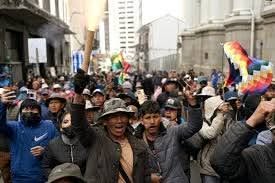
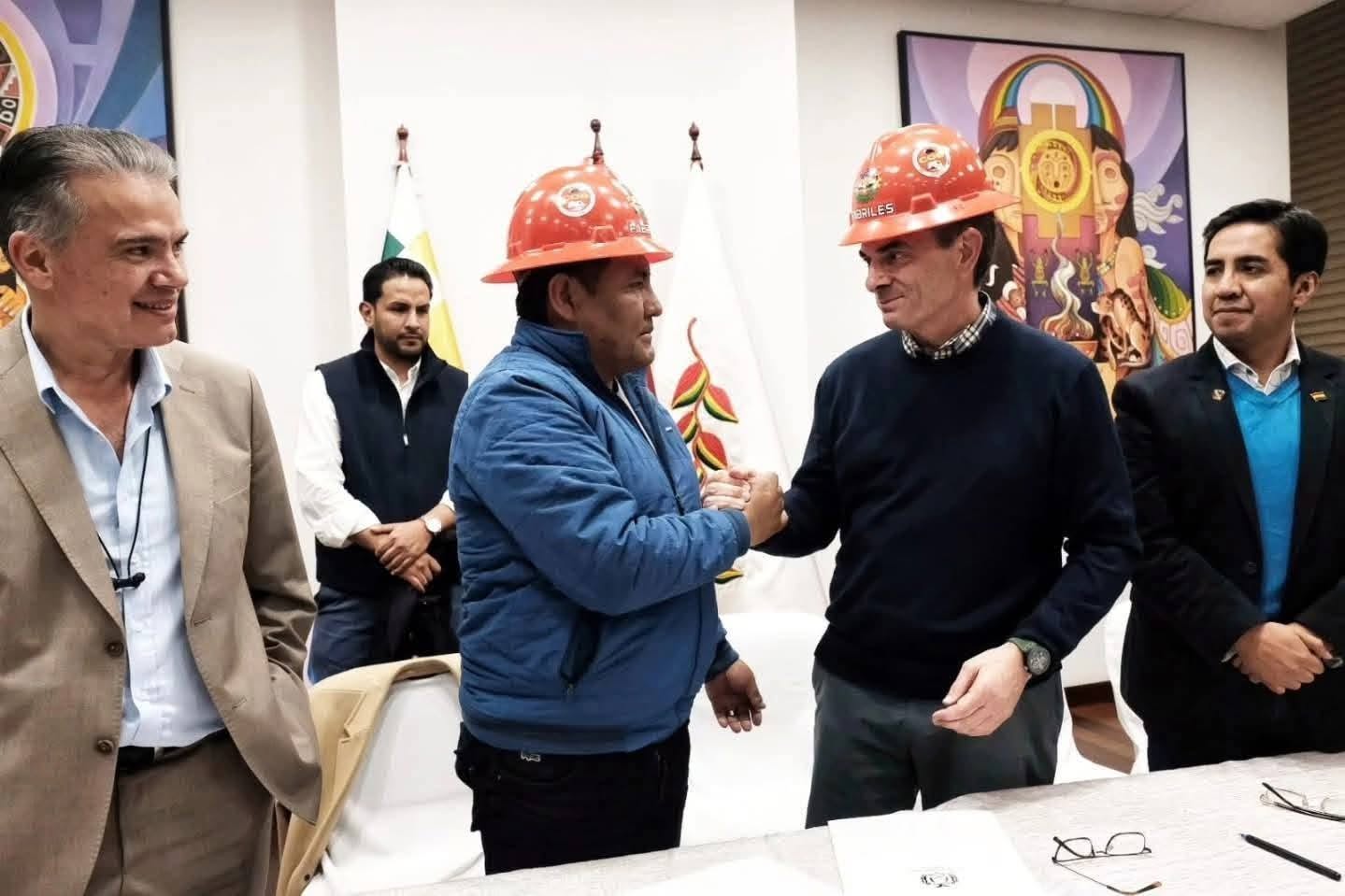
The new revolutionary uprising in Bolivia makes clear once again the reformist policies of the leftist currents. They led the workers' and peasants' vanguard to be tied to the traitors of the COB (Bolivian Workers' Center) and Miners' Federation bureaucracies when they were preparing to make a pact with the government and sell the fourth revolutionary uprising of the poor workers and peasants out, an uprising that would have left the bourgeoisie, subservient to the IMF and US imperialism, hanging by a thread.
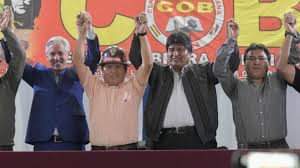
Unfortunately, the POR (Revolutionary Workers' Party) supported the COB leadership, which ended up making a pact with the most servile government to US imperialism in Bolivian history. The POR constantly talks about the "dictatorship of the proletariat" in general and supports the entire COB bureaucracy in particular, with which it is merged. The supposed "struggle for the revolution" that the POR proclaims, hand in hand with the collaborationist bureaucracy of the COB, is nothing more than a smokescreen. We already saw this in 2019, when the POR remained “neutral” in the face of Camacho and Añez’s fascist coup, thus covering for the COB bureaucracy that was preventing the rank-and-file workers from crushing the coup alongside the poor peasants and the exploited people of Senkata and Sacaba. Then the COB leadership ended up making a pact with the murderous Añez… and the POR never denounced the COB bureaucracy! Just like in these 50 days of struggle, where it never called for the defeat of Argollo’s leadership of the COB, much less the mining bureaucracy that removed the miners of Colquiri and Huanuni from the battlefield. The POR was an enemy of calling for the expulsion of the COB bureaucracy and all the traitors, covering the left flank of the COB bureaucracy.
For the POR (Revolutionary Workers' Party), the union bureaucracy is not a paid agent of imperialism and transnational corporations driven by favors; rather, they see the problem of the bureaucracy as an "ideological" one, and therefore position themselves as its advisors. This is confirmed in their statement of June 17, 2026, where they state: "The only way to equip ourselves with leadership consistent with the interests of the workers is by electing revolutionary workers proven in the struggle, trained in the proletarian political line expressed in the Pulacayo Theses, the Theses of the Fourth Congress of the COB (Bolivian Workers' Center) of 1970, and the experience of the People's Assembly of 1971." With this premise, the POR “educated” and supported Argollo and previously every bureaucrat who emerged in the leadership of the COB and the FSTMB, blessing them as “Trotskyists” and “revolutionaries” to cover up their betrayals, while blaming the defeats suffered on the supposed “political backwardness of the workers’ movement” or on the “political limits” of the struggle of the poor peasants.
Other reformist left-wing currents, such as the LOR-CI (PTS) and other groups, asked Argollo to lead the revolutionary struggle until the very end, saying: “Let’s demand that the COB implement the indefinite general strike by downing tools!…” (La Izquierda Diario Bolivia, May 25, 2026). For 50 days, they demanded this of the corrupt bureaucracy, that internal police force of the workers' movement that had already betrayed the revolutionary struggle in January and that, in this new onslaught, dedicated to tying the hands of the workers in the factories and mines to prevent them from taking to the streets. The bureaucracy negotiated sector by sector with the government, undermining the worker-peasant alliance. From day one, they sabotaged the very strike they had called and prevented the miner from going into combat with the dynamite. Meanwhile, the government deployed the Armed Forces and fascist groups.
Now the reformist left is trying to reposition itself in the face of the fraud and betrayal by the COB bureaucracy, but they still haven't broken with it.
There's no point in even talking about resuming the revolutionary struggle without first expelling Argollo's sellout bureaucracy from the COB and all the traitors. The POR and other reformist groups haven't said a single word about this. The struggle to the end demands a revolutionary leadership of the COB with its workers' and peasants' militias, just like in '52. Anything else is paving the way for the government to crush the heroic struggle of workers and peasants.
This isn't the first time the POR has revised Marxism, unfortunately speaking in the name of Trotskyism and with direct influence over the COB, to cover up the betrayals of the COB bureaucracy against the revolutions that took place in Bolivia.
In 1952, the POR ended up supporting the COB bureaucracy, which, with Lechín at its head, entered the government by providing it with ministers and ruling together. This effectively handed power to the "nationalist" bourgeoisie of the MNR, to which the POR offered "critical support," when the plan was for the COB, with its workers' and peasants' militias—its Soviet-style organization—to seize power. This ended in tragedy, in the crushing of the revolution.
In 1971, with its policy of the FRA (Anti-Imperialist Revolutionary Front), the POR ended up subordinating the workers' and peasants' revolution to the "progressive" General Torrez of the Armed Forces, along with the Stalinist parties and Lechín of the COB. This allowed the bourgeoisie, with Banzer's coup, to liquidate the People's Assembly, an embryonic body of dual power.
On the other hand, in 2013, reformist left-wing groups like the LIT-CI, the LOR-CI, and others tested on the Bolivian battlefield the policy that the PTS in Argentina now advocates as a "Workers' Party": with their "Workers' Political Instrument," they legitimized, under pseudo-Trotskyist guise, the trap of the "Workers' Party" led by the COB bureaucracy, which was merely a detour to ultimately bring it under the thumb of the MAS. This led to the nationalization of the COB and its transformation into an appendage of the MAS government and every subsequent government, even under the fascist Áñez. Enough of submitting to bureaucracies and saving the executioner from the fires of revolution!
We believe it is necessary to indelibly mark the politics of the reformist left, since these groups review the theory and program of Trotskyism and the Fourth International, which have stood the test of history and which, through the "Pulacayo Theses," have resonated deep within the mining proletariat, developing the fight against the popular front and fascism, against class collaboration, and paving the way to impose a workers' and peasants' government. Unfortunately, the reformist left hides this because they have spent their time promising the working class milestones of victories and have only delivered terrible defeats.
We, the Trotskyists of the Liga Socialista de los Trabajadores Internacionalistas - Internationalist Socialist Workers League (LSTI) of Bolivia, affiliated with the FLTI, fight to establish a revolutionary and insurrectionist party, and to refound Trotskyism in Bolivia, under the banners of the Fourth International of 1938, so that the working class can count in the next revolution on a revolutionary leadership that is up to the task of preparing the fight for the triumph of the workers' and socialist revolution. |